Should you specify AZS 41 throughout a glass furnace, or keep AZS 33 wherever the purchase price is lower? Neither rule is a reliable selection method. The useful question is which grade, block design and inspection requirements fit each furnace position.
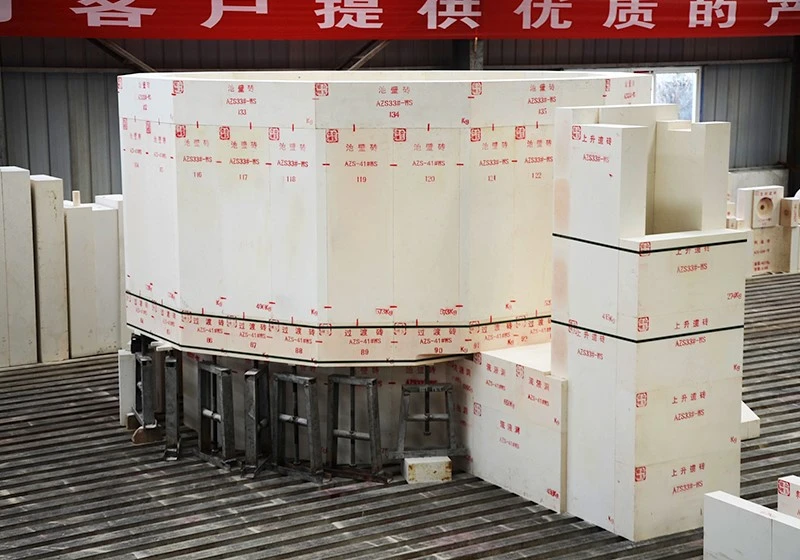
Dezhong furnace preassembly with visible AZS 33 and AZS 41 markings. This is a project example, not a universal grade layout.
Dezhong supplies fused cast alumina-zirconia-silica (AZS) blocks in grades 33, 36 and 41. This guide helps buyers shortlist grades, compare quotations and prepare a clearer technical enquiry. The final specification should follow the furnace design and agreed operating conditions.
The grade number identifies a zirconia-content family. It is not an exact batch analysis, a temperature rating or a guarantee of furnace life.
Use the grade as a starting point
Within conventional AZS ranges, increasing zirconia content is commonly used to address stronger glass-corrosion demands. It does not establish a universal ranking for every property or every glass. Use the table as a discussion guide, not as a fixed installation schedule.
|
Grade |
A starting point for discussion |
What still needs verification |
|
AZS 33 |
General applications where the existing furnace design and service record support this grade. |
Actual exposure, glass compatibility and the required casting type. |
|
AZS 36 |
An intermediate candidate when reviewing corrosion demands beyond the current AZS 33 specification. |
Comparable corrosion evidence and the benefit for the particular position. |
|
AZS 41 |
A candidate for selected locations exposed to severe glass corrosion. |
Glass type, flow and temperature, internal quality and other relevant properties. |
A lower grade number does not mean a defective product. Equally, an AZS 41 label does not replace evidence of sound internal quality, suitable glass-contact behaviour or conformity to the drawing.
Compare current supplier data sheets and results obtained under comparable conditions. Do not assume that similarly named grades from different suppliers are interchangeable.
Technical reference:REFEL standard AZS product range
Check more than the zirconia percentage
A chemistry report helps verify material composition. Ask which sample and batch it represents, and whether the listed values are measured results, typical catalogue values or agreed limits. Keep these categories separate when comparing offers.
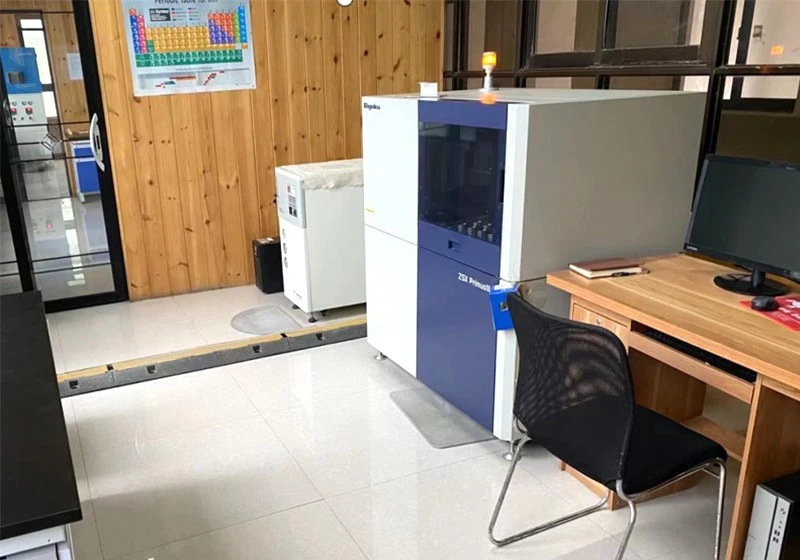
XRF chemical-analysis equipment shown in Dezhong company materials. Chemical results need a sample and batch reference.
Dezhong company materials document XRF chemical analysis, bulk density and apparent porosity checks, glassy phase exudation testing, static and dynamic glass-corrosion testing, and radar internal inspection. The required tests, sampling scope and reporting arrangements should be agreed for the order.
Each answers a different question. Chemistry alone cannot locate an internal shrinkage cavity. A photograph cannot establish an exudation value. For corrosion comparisons, retain the test glass, temperature, duration, method and result definition.
Match the specification to the furnace position
Start by separating glass-contact blocks from structures exposed mainly to the furnace atmosphere. A result from one glass composition should not automatically be applied to another. Review local temperatures and flow, especially when electrical boosting, bubbling or the production mix has changed.

Float-glass furnace port-section preassembly in Dezhong company materials. Grade, geometry and position must be specified together.
A sidewall near an electrode, a throat block and a port-section block do not face identical conditions. Mark the intended position and working face on the drawing. Specify the casting type and internal-quality requirements separately from the chemical grade, and confirm how critical joints and dimensions will be checked.
Changed operating conditions are a reason to review the previous specification, not proof that moving to AZS 41 alone will solve the problem.
Technical reference :SEFPRO technical article on AZS quality and furnace conditions