Jul 27, 2026
Refractory Selection for Key Service-Life Areas in Daily Glass Furnaces
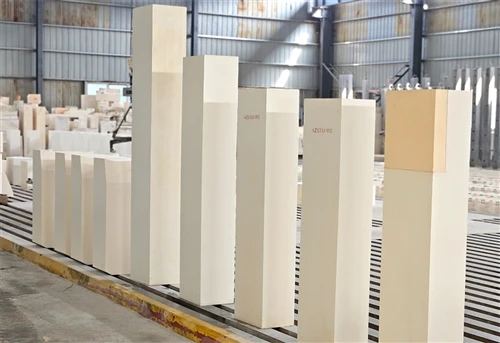
Daily glass furnace campaign life is not decided by one material name alone. It is affected by furnace design, operating temperature, flame direction, glass che
-
![What are the characteristics of unshaped refractory materials?]() Mar 11, 2026What are the characteristics of unshaped refractory materials?In terms of performance, unshaped refractories can be tailored to different application requirements by adjusting the formula and additives, such as iview more
Mar 11, 2026What are the characteristics of unshaped refractory materials?In terms of performance, unshaped refractories can be tailored to different application requirements by adjusting the formula and additives, such as iview more -
![Application areas of unshaped refractories]() Mar 10, 2026Application areas of unshaped refractoriesUnshaped refractories are widely used in industries such as iron and steel metallurgy, building materials, power, petrochemicals, and non-ferrous metaview more
Mar 10, 2026Application areas of unshaped refractoriesUnshaped refractories are widely used in industries such as iron and steel metallurgy, building materials, power, petrochemicals, and non-ferrous metaview more -
![Physical and chemical properties of monolithic refractories]() Mar 09, 2026Physical and chemical properties of monolithic refractoriesUnshaped refractories are refractory materials composed of refractory aggregates and powders with a specific particle size distribution, binders, andview more
Mar 09, 2026Physical and chemical properties of monolithic refractoriesUnshaped refractories are refractory materials composed of refractory aggregates and powders with a specific particle size distribution, binders, andview more -
![Introduction to Unshaped Refractory Materials]() Mar 08, 2026Introduction to Unshaped Refractory MaterialsUnshaped refractories, also known as bulk refractories, are composed of refractory aggregates, powders, binders, and additives mixed in specific propoview more
Mar 08, 2026Introduction to Unshaped Refractory MaterialsUnshaped refractories, also known as bulk refractories, are composed of refractory aggregates, powders, binders, and additives mixed in specific propoview more -
![Application of electrofused refractory materials]() Mar 07, 2026Application of electrofused refractory materialsElectrofused refractories are mainly used in the lining of glass melting furnaces, such as burner nozzles, flow channels, working pools, feeding inletview more
Mar 07, 2026Application of electrofused refractory materialsElectrofused refractories are mainly used in the lining of glass melting furnaces, such as burner nozzles, flow channels, working pools, feeding inletview more -
![Main types of electrofused refractory materials]() Mar 06, 2026Main types of electrofused refractory materialsCurrently, the refractory materials used for glass furnace walls are typically fused cast AZS bricks. Fused cast AZS materials are mainly composed ofview more
Mar 06, 2026Main types of electrofused refractory materialsCurrently, the refractory materials used for glass furnace walls are typically fused cast AZS bricks. Fused cast AZS materials are mainly composed ofview more -
![Introduction to Electrofused Refractory Materials]() Mar 05, 2026Introduction to Electrofused Refractory MaterialsElectrofused refractory materials are products formed by melting raw materials with electric heating and then casting or other methods. Examples incluview more
Mar 05, 2026Introduction to Electrofused Refractory MaterialsElectrofused refractory materials are products formed by melting raw materials with electric heating and then casting or other methods. Examples incluview more -
![Applications of refractory materials]() Mar 04, 2026Applications of refractory materialsThe metallurgical industry is one of the main application areas for refractory materials. In the steelmaking process, the internal temperatures of equview more
Mar 04, 2026Applications of refractory materialsThe metallurgical industry is one of the main application areas for refractory materials. In the steelmaking process, the internal temperatures of equview more -
![Performance characteristics of refractory materials]() Mar 03, 2026Performance characteristics of refractory materialsMechanical properties of refractory materials include compressive strength, tensile strength, flexural strength, torsional strength, shear strength, iview more
Mar 03, 2026Performance characteristics of refractory materialsMechanical properties of refractory materials include compressive strength, tensile strength, flexural strength, torsional strength, shear strength, iview more -
![Structure of refractory materials]() Mar 02, 2026Structure of refractory materialsAcidic refractories are primarily composed of silicon dioxide, with silica bricks and clay bricks being common examples. Silica bricks are siliceous pview more
Mar 02, 2026Structure of refractory materialsAcidic refractories are primarily composed of silicon dioxide, with silica bricks and clay bricks being common examples. Silica bricks are siliceous pview more -
![Introduction to Refractory Materials]() Mar 01, 2026Introduction to Refractory MaterialsRefractory materials are a class of inorganic non-metallic materials with a refractoriness of not less than 1580℃. Refractoriness refers to the Celsiuview more
Mar 01, 2026Introduction to Refractory MaterialsRefractory materials are a class of inorganic non-metallic materials with a refractoriness of not less than 1580℃. Refractoriness refers to the Celsiuview more